- OrcaPulse
- Posts
- OrcaPulse | Issue #105: Navigating the EU AI Act – What Data Scientists & Developers Need to Know
OrcaPulse | Issue #105: Navigating the EU AI Act – What Data Scientists & Developers Need to Know

Kevin Neary
December 10, 2024
Welcome to OrcaPulse: Your Weekly Guide to Responsible AI Breaking down AI ethics, compliance, and innovation – one pulse at a time.
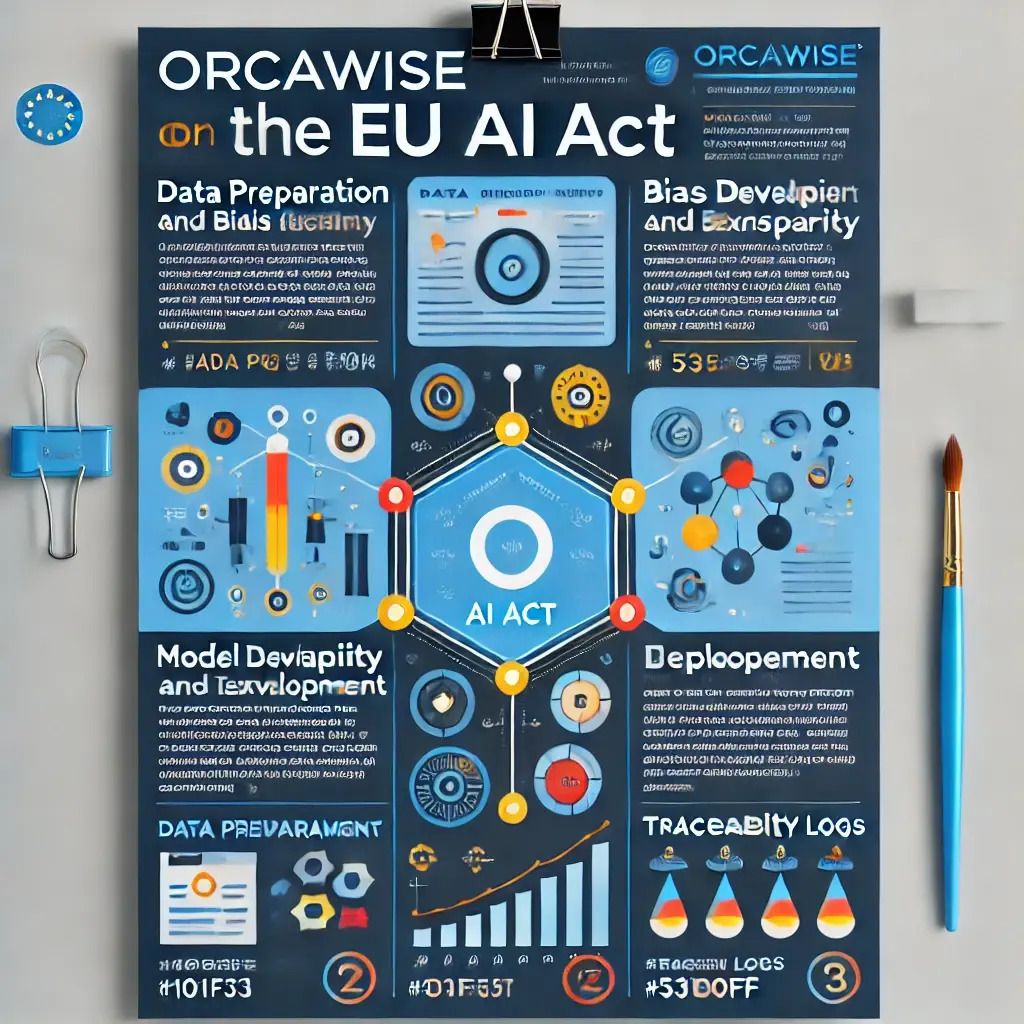
Image: ChatGPT 4.o
The EU AI Act is here to reshape the way AI is developed, deployed, and governed—and as a Data Scientist or Developer, you are at the core of these changes.
This week, we’re diving into how the EU AI Act directly impacts your work and what you need to start doing now to ensure compliance and stay ahead of evolving standards.
What Is the EU AI Act and Why Should You Care?
The EU AI Act introduces strict regulations for high-risk AI systems, affecting data preparation, model development, and deployment workflows. Here’s why it matters to you:
Data Scientists:
Data Quality - You’re now responsible for ensuring datasets used in AI systems meet strict requirements for accuracy, diversity, and fairness.
Bias Detection - Compliance requires implementing tools and techniques to identify and mitigate bias in datasets.
Developers:
Transparency Requirements - High-risk AI systems must provide explanations for outputs, impacting how you design and deploy models.
Technical Documentation - You’ll need to create detailed, auditable logs for your systems, covering training data, algorithms, and performance metrics.
Actionable Impact:
Ignoring these regulations could mean costly redesigns down the road or non-compliance fines. Adapting your workflows now ensures future-proofed models ready for deployment in the EU market.
How It Impacts Your Workflow
Data Preparation
Start auditing datasets for bias and ensure alignment with the Act’s quality requirements.
Automate lineage tracking and documentation of data pipelines to ensure accountability.
Model Development
Focus on explainability - Integrate post-hoc explainability tools (e.g., LIME, SHAP) into your models.
Use AI bias detection tools like Fairlearn or AI Fairness 360 to evaluate model fairness.
Deployment
Build systems with transparency features, such as traceable logs for model predictions.
Collaborate with legal teams to ensure your system meets classification standards (e.g., high-risk vs. limited-risk AI systems).
RAI Tip of the Week - How to Build Transparency into Your AI Systems
Transparency is now a requirement for high-risk AI systems under the EU AI Act.
Here’s how to get started:
Implement traceability logs in your pipelines to capture every step of data preprocessing, model training, and deployment.
Create user-facing explanations for AI decisions using open-source explainability tools.
Top Stories in Responsible AI
1. AI Literacy Deadline February 2nd, 2025. EU AI Act: Article 4 Summary.
Why AI Literacy Matters for Data Scientists and Developers -
Career Growth - Demonstrating expertise in Responsible AI and regulatory compliance positions you as a leader in the field, opening doors to new opportunities. By embracing AI literacy, data scientists and developers can build not only better systems but also ensure those systems are deployed responsibly and legally.
What you need to know:
Compliance Responsibility - As the creators and maintainers of AI systems, you’re directly responsible for aligning AI models with regulatory requirements like transparency, fairness, and accountability.
Risk Mitigation - Understanding the broader implications of AI (beyond code) helps you identify potential ethical or legal risks early in the development pipeline.
Cross-Team Communication - AI literacy enables you to effectively communicate technical concepts to non-technical stakeholders, such as legal and business teams, ensuring organization-wide alignment.
2. Agentive AI Set to Skyrocket in 2025
What are AI Agents?
AI agents are autonomous systems that perform tasks on behalf of a user or another system by designing workflows and leveraging tools. According to Anna Gutowska, Data Scientist at IBM, AI agents are powered by large language models (LLMs), which is why they’re often referred to as LLM agents.
How Do AI Agents Work?
Three key factors influence the behavior of autonomous agents:
The developers who design and train the agentic AI system.
The team deploying the agent, ensuring users have proper access.
The user, who provides goals for the agent and defines available tools.
What You Need to Know:
The current demand for LLM skills is largely driven by custom application development. However, this is just the beginning. As AI agents become mainstream, the demand for professionals skilled in LLMs and agent-based AI systems is expected to explode.
Stay ahead of the curve by upskilling in LLMs and exploring the development of autonomous agents.
Upcoming Events?
Guide to Fine-tuning: 12.00 UTC, Thursday 12th on LinkedIn Live. Weekly training series covering Responsible Model Development. The week we focus on Model Evaluation, Selection & Set-up. Register for Free Linkedin Live Training. This is designed for Data Scientist, Engineers, Developers and AI Enthusiasts.

How to Customize & Deploy LLMs: 12.00 UTC Friday 13th. This free lightening session training is an overview of the full five steps to model customization, optimization and deployment. It’s an introduction to highly popular LLM Bootcamp Pro Course on Maven. Register for the Maven lightening session here.
What’s Next on OrcaPulse?
Next week, we’ll discuss "How to Fine-Tune LLMs While Meeting EU AI Act Requirements", featuring practical steps to align your development process with compliance standards.
Stay in the Loop
Have questions about how the EU AI Act impacts your workflow? Hit reply to share your challenges or insights!
Follow us on LinkedIn for more updates, resources, and discussions.
Until next time,
The OrcaPulse Team
Join the waitlist for LLM Bootcamp Pro: Intensive bootcamp training.